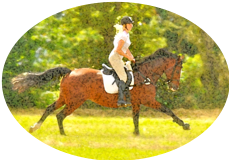
Oh it’s been a rough old journey with Mocca.
When I bought Mocca as a rising 5 year old in 2014, I thought we had years of fun ahead of us. We joined the local riding club and took advantage of the training offered, as well as affiliating with British Showjumping, planning to work our way up through the classes. Unfortunately, after only a year together it became clear that Mocca was suffering from intermittent bouts of lameness. There were a variety of diagnoses – abscesses, corns and being ‘foot sore’ – but eventually, two years on in 2017, we found the culprit. Navicular Syndrome.
What is Navicular Syndrome?
Navicular Syndrome is a condition with a cause that is still in question. There are many factors that can contribute towards Navicular Syndrome, but mechanical stress and strain is one that is believed to play a large part in the degeneration of several parts of the foot. Conformation can also generate issues in the foot; low heels and flat feet likely didn’t help in Mocca’s case. Usually horses have Navicular Syndrome in both fore limbs but it can sometimes be seen in just one foot. While Mocca presented with fore limb bilateral lameness, she struggles more with her right fore.
How are we managing Mocca?
Finding out your horse has a degenerative, incurable condition is devastating, but it turns out it isn’t always the end of the road, there are ways it can be managed! We did a LOT of research and looked into every possible treatment to make Mocca comfortable. After many discussions with the vets and having looked at our options, we decided to take Mocca back to being barefoot to see if she could naturally build her heel up to give her more upright feet.
Barefoot worked for 6 months. Mocca has such flat feet that, despite regular trims to ensure balance, she was unable to give her feet enough support to make her comfortable. Next we tried regular shoeing along with gel to give more support. Mesh was placed under the shoe then filled with a copper sulphate gel which dried to create a hoof packing and absorb shock. It worked brilliantly…for 6 months.
Heart bar shoes were our penultimate attempt to keep Mocca sound but, again, they only supported her for 6 months!
We are currently almost two years into pads filled with gel underneath and so far so good! There has been the odd blip where she hasn’t quite looked or felt right but these have always seemed to have a reason behind them. Mocca struggles with hard ground so most of the summer is spent walking when out hacking, only trotting or cantering when the ground is super soft under foot. Usually I would make the most of hacking out during the summer months but with Mocca I tend to go out twice a week then lunge and school in the sand/rubber arena a couple of times a week to avoid the hard ground. When lunging I try to avoid too many circles by lunging large around the arena – yes, that does mean running down the long sides with her!
What are the treatments for Navicular Syndrome?
There are a variety of treatments for alleviating the symptoms of Navicular Syndrome, however veterinarians are still working to find both a cause and cure. Some of the most common treatments include rest, corrective trimming/shoeing and systemic anti-inflammatories – either orally or injected directly into the hoof (coffin joint and/or navicular bursa). In extreme cases, where the aforementioned treatments are ineffective, palmer digital neurectomy (surgically removing some nerves in the back of the pastern) can be performed to provide long-term pain relief.
Managing a horse with Navicular Syndrome can be exhausting; the constant worry, looking for signs of lameness ALL the time and fear of having to start over again with another treatment. Until further extensive research is done, managing the symptoms of Navicular Syndrome is the best we can do to keep horses struggling as comfortable as possible.
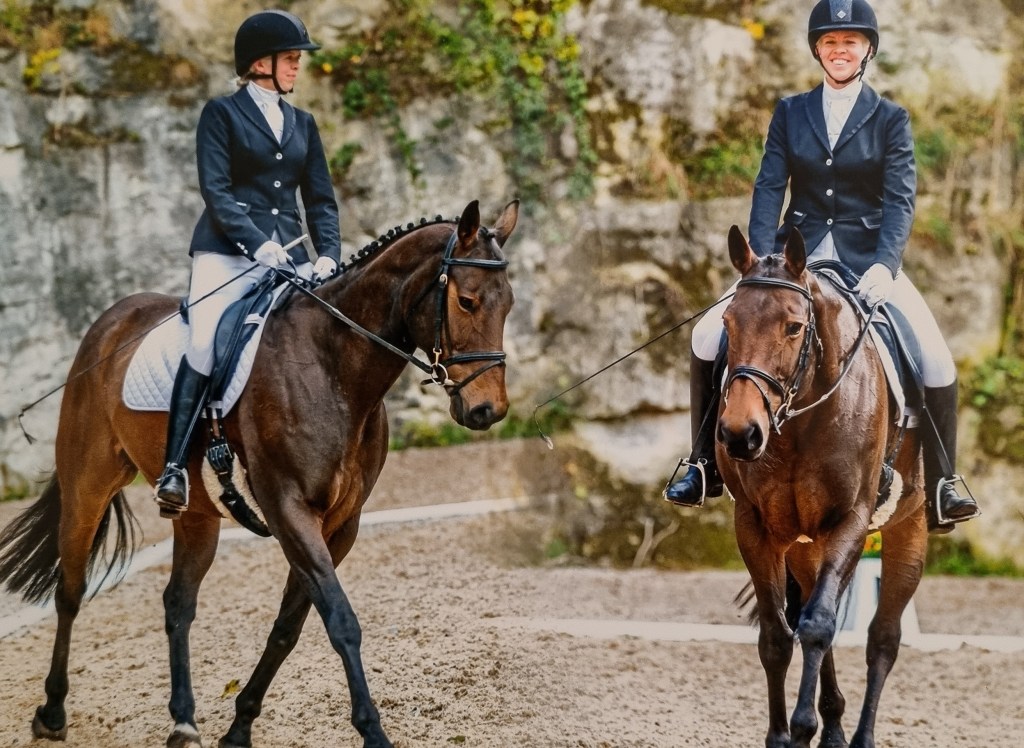
Luckily, Mocca seems to be comfortable at the moment with hacking, lunging and schooling, with the odd jump here and there. So we will continue having fun while we can and might even enter a few more dressage competitions in the New Year!
*Every horse is different, therefore every treatment is different. Please seek veterinary advice if you believe your horse may have Navicular Syndrome.
 Sadie in the Saddle
One thought on “Managing a Horse with Navicular Syndrome”